
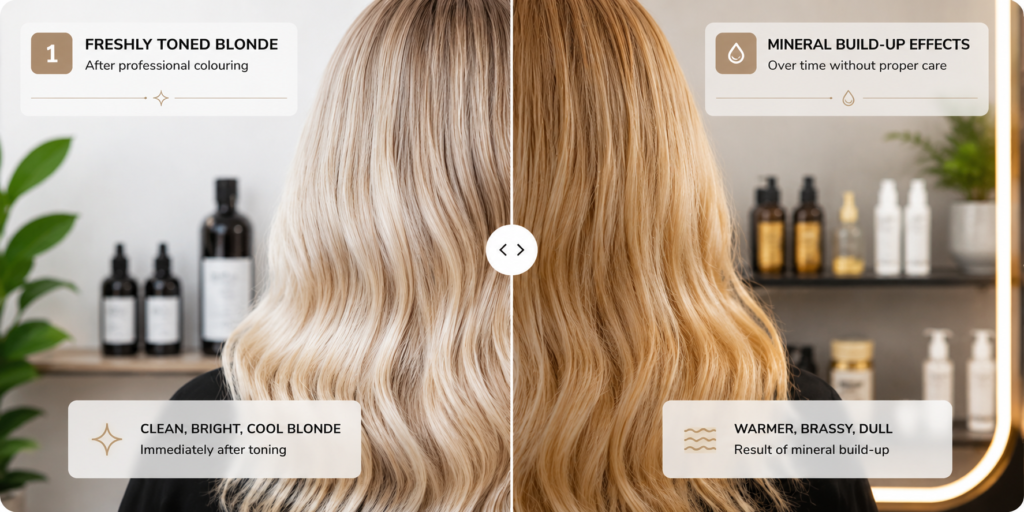
Mineral build-up from hard water, iron and copper can gradually cause blonde hair to appear warmer, brassier or orange over time.
Many people assume blonde hair turns orange because their toner has faded. However, hard water, iron, copper and mineral build-up can also contribute to unwanted warm tones and brassiness over time. Blonde hair, highlights and balayage can look bright, clean and beautifully toned immediately after a salon visit. However, many people notice that over time their blonde hair begins to appear warmer, brassier or even orange.
While natural oxidation, sunlight and fading can contribute to unwanted warmth, one often overlooked cause is mineral build-up from water.
Understanding how minerals interact with the hair can help explain why blonde hair sometimes changes colour between appointments.
Does Hard Water Make Blonde Hair Orange?
Hard water itself does not directly turn blonde hair orange. However, minerals such as iron, copper, calcium and manganese can build up on the hair over time and contribute to brassiness, dullness and unwanted warm tones.
What Causes Blonde Hair to Turn Orange?
When blonde hair develops unwanted orange, yellow or brassy tones, several factors may be involved:
- Natural underlying warm pigments in the hair
- Oxidation from sunlight and environmental exposure
- Heat styling
- Product build-up
- Hard water and mineral deposits
Often, mineral accumulation gradually affects the appearance of blonde hair, especially in lighter shades where colour changes are more visible.
Can Hard Water Affect Blonde Hair?
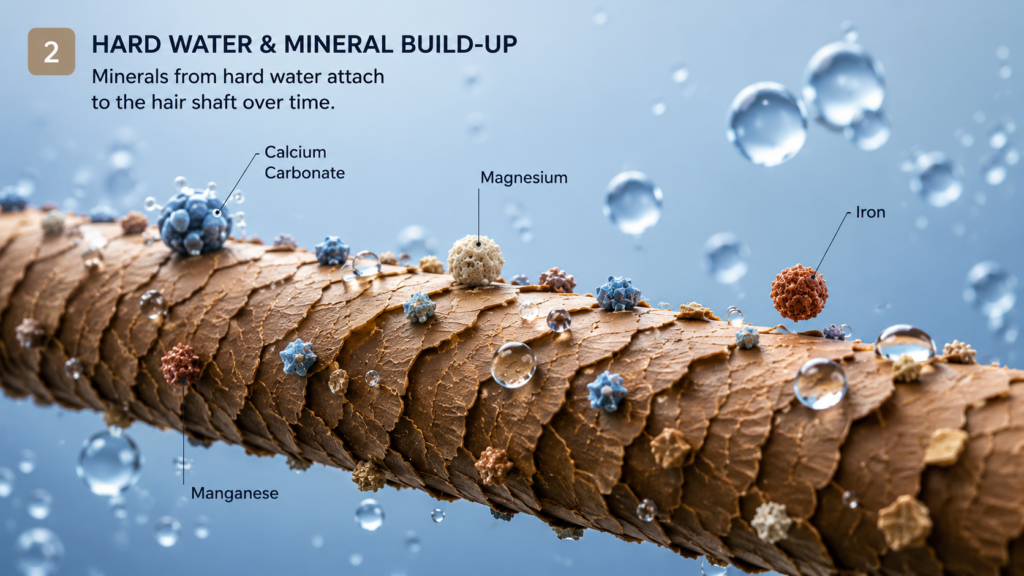
Hard water contains elevated levels of dissolved minerals, particularly calcium and magnesium.
Although these minerals do not directly dye the hair orange, they can accumulate on the hair surface over time, creating a coating that affects shine, softness and colour clarity.
This build-up may make blonde hair appear dull, uneven or more prone to developing unwanted warm tones.
The Role of Iron in Water
Iron is one of the minerals most commonly associated with colour changes in hair.
When water contains elevated levels of iron, repeated exposure can lead to deposits attaching to the hair shaft.
In blonde, highlighted or colour-treated hair, iron deposits may contribute to the following:
- Orange tones
- Rust-like discolouration
- Dullness
- Reduced colour brightness
The effect is often more noticeable on very light blonde hair.
How Copper Can Affect Blonde Hair
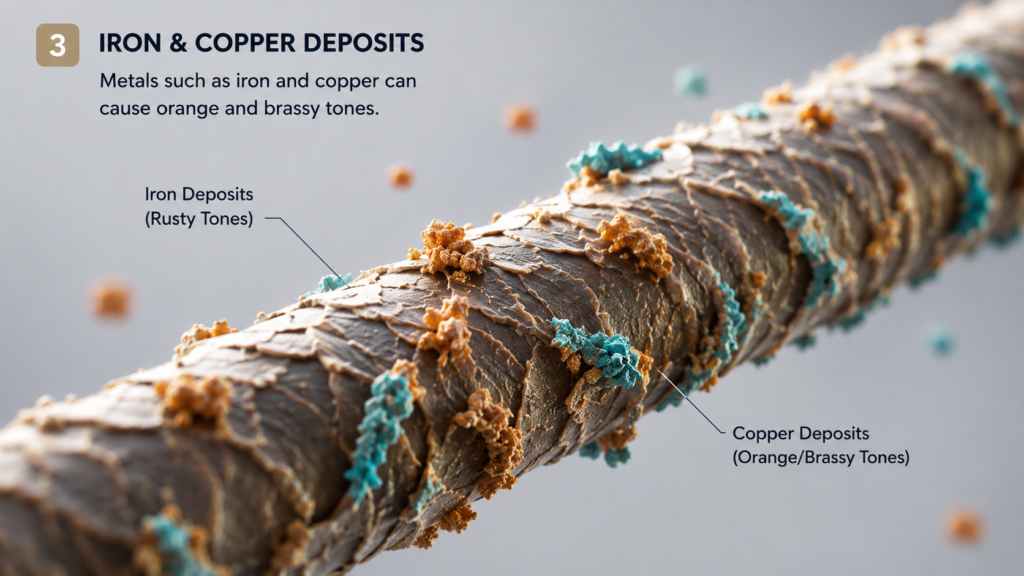
Copper is another mineral that can affect hair colour.
Copper may enter water supplies through ageing plumbing systems or other environmental sources.
Over time, copper deposits can build up on hair and contribute to unwanted colour shifts.
Some people notice:
- Warm brassiness
- Orange tones
- Colour distortion
- Reduced shine
Blonde and chemically lightened hair is particularly susceptible, as lighter shades reveal colour changes more easily.
Calcium and Magnesium Build-Up
Calcium and magnesium are the primary minerals responsible for hard water.
While they do not usually create orange tones directly, they can leave deposits that:
- Reduce shine
- Make hair feel rough
- Affect colour longevity
- Increase tangling
- Make hair appear less vibrant
Mineral-coated hair may also respond differently to haircare products.
Why Is This More Common in Some Areas?
Water composition varies significantly between regions.
Some areas naturally contain higher mineral concentrations than others.
In parts of the United Kingdom, hard water is common, which is why some individuals notice increased brassiness or colour changes, even when using professional haircare products.
How to Reduce Mineral Build-Up
Several approaches may help reduce the effects of mineral accumulation:
- 1. Install a Shower Filter
- A quality shower filter may help reduce some metals and impurities before they reach the hair.
- 2. Use a Clarifying Shampoo Periodically
- Clarifying shampoos help remove product residue and some surface mineral deposits that can accumulate on the hair over time.
- 3. Use Products Designed for Metal Removal
- Several professional products have been developed specifically to target mineral and metal build-up, including:
- L’Oréal Professionnel Metal Detox
- Malibu C Hard Water Wellness
- K18 Peptide Prep Detox Shampoo
- Redken Hair Cleansing Cream
- 4. Protect Hair from Oxidation
- UV exposure, pollution and heat styling can accelerate colour fading and unwanted warmth. Using heat protection and UV protection products may help maintain cooler blonde tones.
- 5. Maintain Regular Toning Treatments
- Toners and colour-refreshing treatments can help neutralise unwanted yellow, orange and brassy tones between colouring appointments.
Products such as specialised metal-removal and anti-mineral haircare systems have been developed to help reduce mineral accumulation and maintain colour clarity.
Which Minerals Affect Blonde Hair Most?
| Mineral | Possible Effect on Hair |
|---|---|
| Iron | Rusty, orange tones |
| Copper | Brassy, orange tones |
| Calcium | Dullness and rough texture |
| Magnesium | Mineral coating and loss of shine |
| Manganese | Discolouration and build-up |
While mineral build-up does not affect every person in the same way, understanding how hard water, iron, copper and other minerals interact with hair can help explain many common colour changes experienced between salon visits.
For blonde, highlighted and balayage hair, preventing excessive mineral accumulation may help maintain a brighter, cleaner and more predictable colour result over time.
Frequently Asked Questions
Can hard water turn blonde hair orange?
Hard water itself does not directly colour hair orange, but mineral build-up can contribute to brassiness, dullness and unwanted warm tones.
Why does my balayage become brassy after a few weeks?
Oxidation, environmental exposure, heat styling and mineral deposits can all contribute to brassiness between colour appointments.
Can iron in water affect hair colour?
Yes. Iron deposits are commonly associated with orange, rusty or warm discolouration in blonde and colour-treated hair.
Does copper affect blonde hair?
Copper deposits can cause colour distortion and unwanted warm tones, especially in lighter hair colours.
How can I remove mineral build-up from my hair?
Professional clarifying treatments and specialised anti-metal haircare products can help reduce mineral build-up and improve colour clarity.
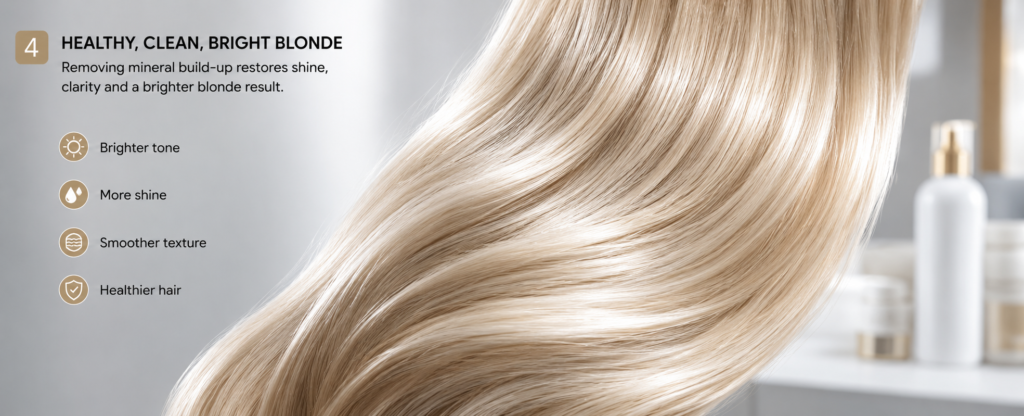
Final Thoughts
Blonde hair turning orange is not always due to colour fading alone. Hard water, iron, copper and other minerals can gradually affect the appearance of blonde, highlighted and balayaged hair.
Understanding the role of mineral build-up can help explain unexpected colour changes and support better long-term hair care.