
If you’re asking, “Why is my hair orange after bleaching?”, you’re not alone. This is one of the most common questions people ask after lightening their hair, especially if they were expecting a cool blonde result.
Why Is My Hair Orange?
If your hair has turned orange after bleaching, you are not alone. Orange, brassy or warm-looking hair is one of the most common problems people experience after lightening their hair, especially when the hair was previously dark, coloured with box dye, or not lifted enough during the bleaching process.
The reassuring news is that orange hair can usually be corrected, but the right solution depends on why it happened. Occasionally a professional toner is enough. In other cases, the hair may need careful colour correction, further controlled lightening, or a personalised treatment plan to protect its condition.
At Emmagiss Hair & Colour in Edgbaston, Birmingham, we regularly help clients who are unhappy with orange, brassy or uneven blonde results. This guide explains why hair turns orange, what you should avoid doing at home, and when it is safer to see a professional colour correction specialist.
Why Is My Hair Orange After Bleaching? Causes, Fixes & Professional Advice
Hair turns orange after bleaching because bleach does not add colour to the hair; it removes both natural and artificial pigments. When dark hair is lightened, it goes through several warm stages before it becomes blonde. These stages can include red, red-orange, orange, orange-yellow and yellow.
If the bleaching process stops before the hair reaches the correct level, the remaining warm pigment can show through. This is why brown or dark blonde hair often turns orange instead of becoming a clean blonde straight away.
Orange hair does not always mean it is “ruined” or “bad”. It usually means the hair has not lifted enough or that there is old colour, mineral build-up, or previous dye sitting inside the hair. The most important thing is to understand the cause before trying to resolve it.
9 Common Reasons Your Hair Turned Orange:
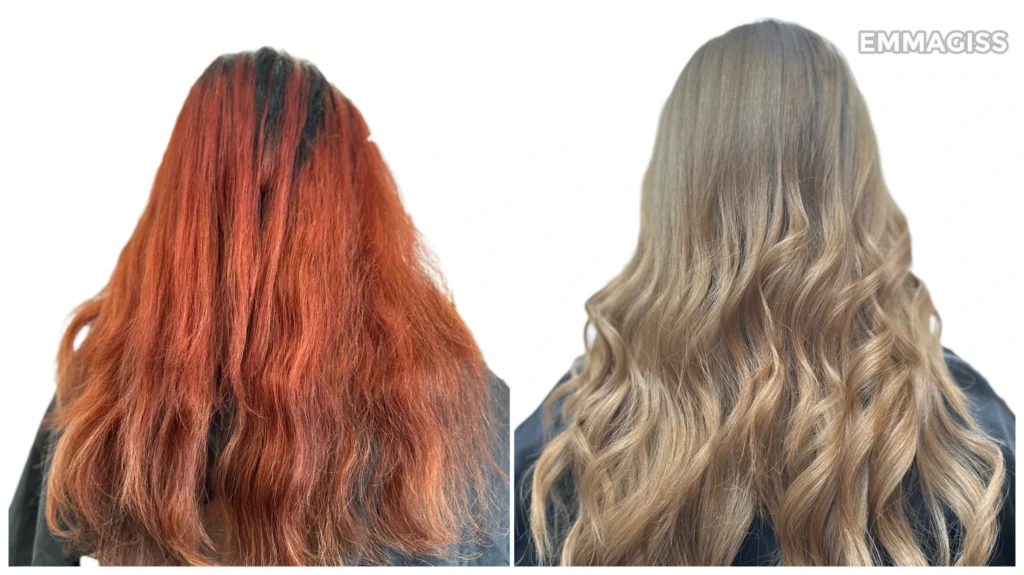
Orange hair doesn’t happen for just one reason. The cause could be anything from insufficient lifting and previous box dye to hard water minerals or an incorrect toner. Before trying to resolve the problem, it’s important to understand what caused it. Below is a real colour correction carried out at Emmagiss Hair & Colour, followed by the most common reasons why hair turns orange after bleaching.
Real colour correction by Emmagiss Hair & Colour
This client visited our salon with strong orange and copper tones from previous colour work. Using a personalised colour correction plan, we transformed the hair into a softer, more natural-looking blonde while protecting its condition. Every colour correction is tailored to the client’s hair history, hair condition and desired result.
1. Your Hair Wasn’t Lightened Enough
The most common reason hair turns orange is that it simply wasn’t lifted to a light enough level during the bleaching process.
Bleach removes pigment gradually. Dark hair naturally passes through red, red-orange and orange stages before reaching yellow and pale blonde. If the bleaching process stops too early, those underlying warm pigments remain visible.
Trying to cover orange hair with toner alone usually doesn’t work if the hair hasn’t reached the correct lifting level. Often, the hair first needs to be lightened safely before applying the appropriate toner.
2. Your Natural Hair Colour Is Dark
Naturally dark brown or black hair has much stronger warm pigments than lighter hair colours. Even when bleach is applied correctly, these pigments appear as the hair lifts.
This is completely normal and does not mean anything has gone wrong. However, darker hair often requires multiple lightening sessions to achieve a clean blonde while keeping the hair healthy.
Rushing the process by over-bleaching in one appointment can lead to unnecessary damage, breakage and uneven colour.
3. Previous Box Dye Is Still Inside the Hair
Box dyes are one of the biggest reasons why professional colour correction is more challenging. Even if the colour looks faded, artificial pigment can still remain deep in the hair.
When bleach is applied over old box dye, the colour may lift unevenly, leaving bright orange bands or patchy areas instead of an even blonde.
Professional colour correction usually starts with an assessment of the hair history before deciding whether further lightening or multiple sessions are needed.
4. Hard Water and Mineral Build-Up
Minerals such as iron, copper and calcium can build up on the hair over time, especially in areas with hard water. These deposits may affect how bleach and toner perform, leaving blonde hair looking dull, brassy or orange.
If mineral build-up is suspected, clarifying or chelating treatments may be recommended before colour correction. This helps create a cleaner surface, allowing colour products to work more effectively.
5. The Wrong Toner Was Used
Toner can only refine the underlying colour that has already been achieved. If the hair is still too orange, applying the wrong toner will not create a cool blonde.
Choosing the correct toner depends on the lifting level, the remaining warm pigment and the desired result. In some cases, the hair may need further controlled lightening before toning can produce the expected colour.
I am not certain why your hair has turned orange.
Every colour correction starts with understanding what caused the issue. If you’re unsure whether your hair needs another lightening session or simply the right toner, send us a few photos on WhatsApp. We’ll assess your hair history and recommend the safest option for achieving your desired result.
6. Your Bleach Was Removed Too Soon
Bleach needs enough time to lift the natural pigment inside the hair. If it is rinsed off too early, the lifting process stops before the hair reaches the correct level.
This often leaves strong orange or orange-red tones behind. Although it may be tempting to bleach again immediately, the safest approach is to first assess your hair’s condition to avoid unnecessary damage.
7. Your Hair Has Uneven Porosity
Hair that has been coloured, heat damaged or chemically treated often has uneven porosity. This means some areas absorb and release colour differently from others.
As a result, bleach may lift certain sections faster while leaving other areas darker or more orange. Professional colour correction takes porosity into account, creating a more even result across the hair.
8. Previous Colour Build-Up
Even salon colour can build up over time. Repeated colouring without removing old pigment can leave layers of artificial colour inside the hair.
When the hair is lightened, these layers often lift unevenly, creating unwanted warmth or orange patches. This is one of the reasons why professional consultation is so important before attempting a major colour change.
9. Trying to Go Too Blonde in One Session
One of the most common mistakes is expecting very dark hair to become an icy blonde in a single appointment.
Healthy blonde transformations often require patience and, in some cases, multiple sessions. Trying to remove too much pigment too quickly can increase the risk of damage while still leaving unwanted orange tones behind.
A personalised treatment plan allows the hair to be lightened safely while protecting its strength, shine and overall condition.
As you can see, orange hair can have many different causes, and the correct solution depends on the reason behind it. Before reaching for another box of bleach or toner, it’s important to understand what your hair actually needs. In the next sections, we’ll explain whether purple shampoo, blue shampoo or toner can really fix orange hair—and when professional colour correction is the safest option.
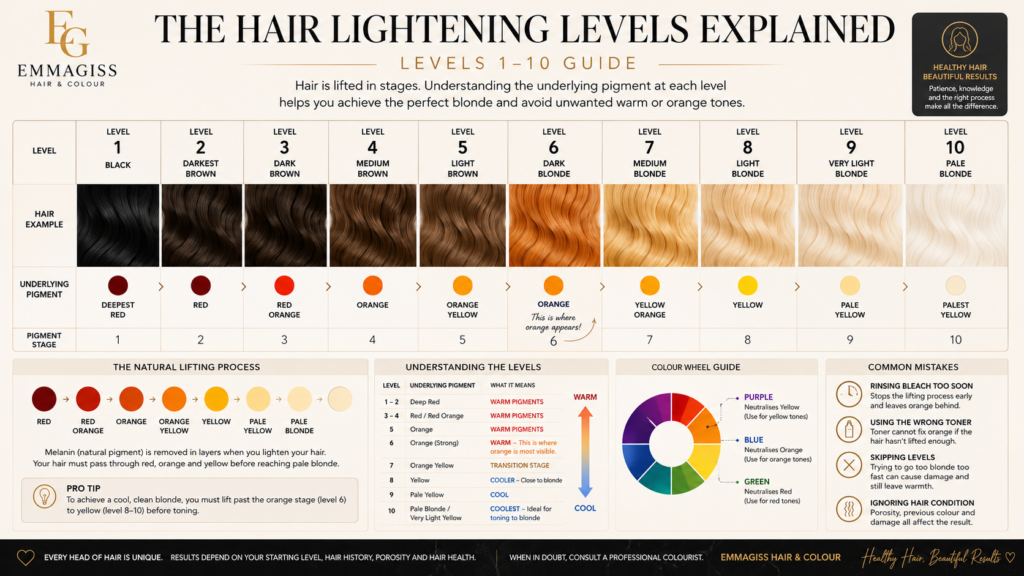
The Hair Lightening Levels Explained (Levels 1–10)
- Level 1–2: Black to darkest brown with deep red underlying pigment.
- Level 3–4: Dark to medium brown where red-orange pigments become visible.
- Level 5: Light brown with strong orange undertones.
- Level 6: Dark blonde, where orange is most noticeable.
- Level 7: Medium blonde with orange-yellow pigments.
- Level 8: Light blonde with yellow pigments.
- Level 9: Very light blonde with pale yellow tones.
- Level 10: Pale blonde with minimal remaining pigment, ready for cool blonde toning
Conclusion
Orange hair after bleaching is far more common than most people realise, and it doesn’t always mean that something has gone wrong. Often, it’s simply part of the natural lightening process or the result of previous colour, box dye, hard water or insufficient lifting.
The safest way to achieve a beautiful blonde is to understand what caused the unwanted warmth before choosing a solution. Whether your hair needs a professional toner, further controlled lightening or full colour correction, protecting the health of your hair should always come first.
With the right approach, you can often transform orange hair into a balanced, natural-looking blonde while keeping your hair healthy.
Need Professional Colour Correction?
If your hair has turned orange after bleaching, don’t panic or rush to apply more bleach at home. Every head of hair is different, and the safest solution depends on your hair history, condition and previous colour treatments.
At Emmagiss Hair & Colour in Edgbaston, Birmingham, we specialise in personalised colour correction for clients with uneven blonde or orange tones, box dye history and previous colour problems.
If you’re unsure what your hair needs, simply send us a few photos on WhatsApp. We’ll assess your hair and recommend the safest route to achieving your desired blonde.
Related Articles
- Why Does Hard Water Turn Blonde Hair Orange?
- Balayage vs Highlights: Which Is Right for You?
- Can I Go Blonde in One Session?
- How Much Does Colour Correction Cost?
- Purple Shampoo vs Blue Shampoo
If your hair has turned orange after bleaching, the right next step may be a toner, blonde refresh or professional colour correction, depending on your hair history, condition and desired result. If you are unsure which option to book, read our guide to choosing the right hair colour service before making your decision.
FAQ
- Why did my hair turn orange after bleaching?
- Can toner fix orange hair?
- Will purple shampoo remove orange tones?
- Do I need blue shampoo?
- Can orange hair be corrected without bleaching?
- How many sessions does colour correction usually take?
- Can box dye cause orange hair?
- Does hard water affect blonde hair?
- Why are my roots orange?
- Can I bleach orange hair again?
Healthy blonde hair isn’t achieved by bleaching more—it’s achieved by understanding the hair, lifting it safely and choosing the right colour at the right time.